Oakes Furniture
Technical Specifications & Global Procurement Standards
An in-depth analysis of outdoor structural integrity, safety certifications, and supply chain strategies.
The Evolution of the Global Outdoor Furniture & Patio Table Market
The global outdoor furniture industry has transitioned from seasonal backyard items to highly functional architectural design statements. The modern consumer and commercial sectors demand furniture that offers a seamless transition between indoor comfort and outdoor resilience. Consequently, the engineering of patio tables must accommodate complex atmospheric variables, including extreme ultraviolet (UV) radiation, localized humidity variations, structural load requirements, and intense thermal fluctuations.
For global B2B buyers—ranging from property developers and hospitality purchase managers to large-scale furniture importers—sourcing durable patio tables requires a meticulous understanding of structural mechanical engineering and materials science. It is no longer sufficient to evaluate a manufacturer solely on aesthetic appeal. A supplier must demonstrate long-term product durability, supply chain reliability, and adherence to internationally recognized quality frameworks.
Decoding CE Certification: The Non-Negotiable Standard for European Sourcing
When exporting furniture to the European Economic Area (EEA), the CE (Conformité Européenne) mark stands as the primary indicator of safety, health, and environmental compliance. For patio tables, CE conformity is deeply linked to specific standardizations, most notably the EN 581 series:
- EN 581-1 (General Safety Requirements): Ensures that the table has no exposed sharp corners, rough surfaces, or potential shear/pinch points that could cause physical injury during deployment, cleaning, or storage.
- EN 581-3 (Mechanical Safety Requirements for Tables): This standard specifies test methods for determining the mechanical stability, static load resistance, and impact durability of outdoor tables. Manufacturers must subject the tables to vertical downward force distributions, asymmetric edge pressure tests, and structural deflection tests under temperature-controlled settings.
- EN 1022 (Stability Testing): Evaluates the tipping point threshold of integrated table and seating units to prevent accidents, particularly in high-density public or commercial venues.
Ensuring compliance requires certified laboratories to test raw materials under simulated stress conditions, including UV weatherometer exposure tests (typically ISO 4892-2 procedures) and salt spray chamber tests (ASTM B117 standards) to guarantee anti-corrosion properties of powder-coated steel or aluminum frames.
Global Sourcing Metrics: Structural Engineering and B2B RFP Criteria
Enterprise buyers must outline structural performance metrics during the request-for-proposal (RFP) process. Key considerations for high-traffic environments, such as hotels, cafes, and corporate offices, include:
- Material Choice: Powder-coated aluminum provides lightweight rustproofing, whereas steel requires advanced electrophoretic deposition (E-coating) to prevent subsurface rust oxidation. High-density polyethylene (HDPE) and treated solid timbers require UV stabilizers (UV level 3000 hours minimum) to prevent fading and structural splitting.
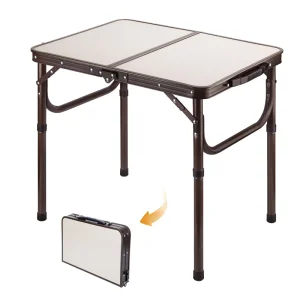
- Knock-Down (KD) Engineering: Efficient packaging is vital for maritime shipping optimization. A patio table engineered with a precise KD assembly system drastically lowers cubic meter (CBM) measurements, minimizing shipping rates while remaining simple to assemble on-site.
- Static & Dynamic Load Capacities: Professional-grade patio tables should safely support continuous static weight limits of up to 100 kg at the center and 50 kg along edge parameters without structural failure.