Global buyers are rethinking how furniture is made, shipped, and used. A practical question often begins the conversation: what is engineered wood furniture? It refers to furniture made from wood-based panels, such as plywood, MDF, or particleboard. These materials combine wood fibers, veneers, or strands with controlled adhesives and pressure. The result can provide consistent panels, stable dimensions, and efficient material use.
That matters in international purchasing. Engineered wood furniture can offer predictable sizing for bedrooms, offices, and hospitality spaces. Its smooth surfaces also support paint, laminate, veneer, and decorative finishes. A well-designed cabinet may arrive flat-packed, occupy less container space, and reduce handling costs. Small details matter. Strong edge sealing helps protect panels from everyday moisture. Accurate drilling supports faster assembly. Clear installation instructions reduce mistakes across different markets.
However, it is not automatically the best choice. Product quality depends on panel density, adhesive standards, hardware, and manufacturing control. Buyers should request test reports, formaldehyde emission information, moisture-resistance details, and responsible sourcing evidence. Regional standards can differ, so documentation must match the destination market. From practical sourcing experience, samples often reveal issues that catalog photographs hide, including chipped edges or weak joints. That is worth checking.
Engineered wood also has limitations. It may swell after prolonged water exposure, and lower-grade boards can lose strength near screws. Responsible suppliers explain these risks instead of promising perfection. Global buyers need reliable specifications, transparent communication, and repeatable quality. With careful evaluation, engineered wood furniture can balance design, durability, logistics, and cost without ignoring its real-world weaknesses.
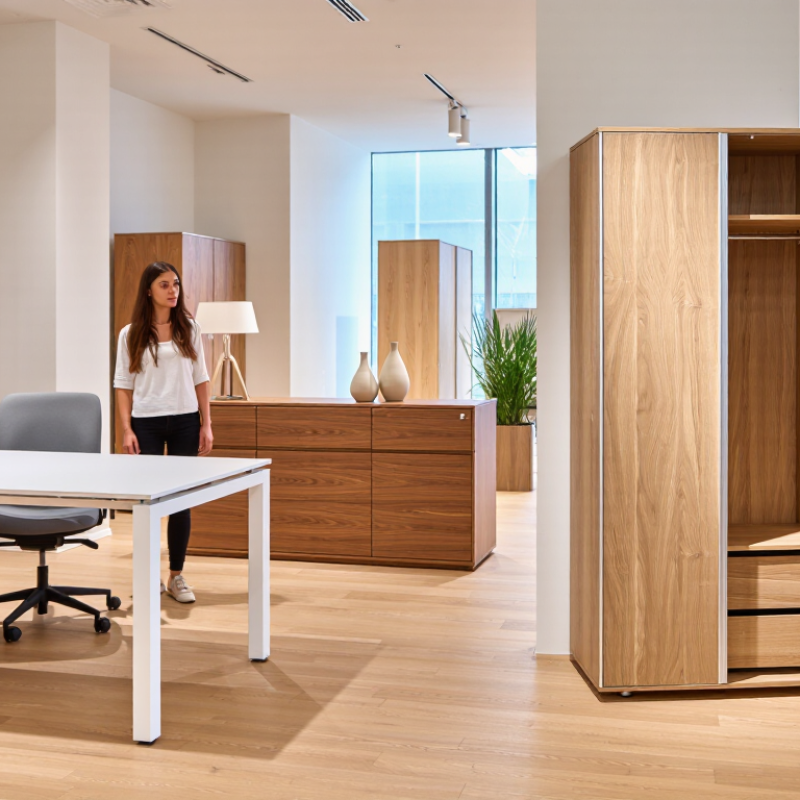
Engineered wood furniture is made from wood fibers, particles, or veneers bonded under heat and pressure. Common panels include plywood, medium-density fiberboard, and particleboard. Unlike solid timber, these materials are manufactured for consistent thickness and predictable performance. The surface may carry melamine, laminate, veneer, or painted finishes. This structure supports clean edges, flat panels, and repeatable designs for international furniture production.
In furniture inspections, I look closely at panel density, edge sealing, fasteners, and surface bonding. These details often decide whether a cabinet survives repeated assembly and daily use. Engineered wood can resist warping better than some solid boards, especially in controlled indoor conditions. It also uses smaller wood pieces efficiently. That can reduce material waste, although production quality still matters. Not flawless.
Buyers should check moisture resistance, formaldehyde test reports, load ratings, and packaging protection. A low-cost panel may swell after water reaches an unsealed edge. Hardware can also loosen when the core is weak. I have found that clear technical documents build more trust than attractive product photos. Specifications should state board type, thickness, finish, care requirements, and applicable safety standards. The right choice depends on climate, room use, shipping distance, and expected service life. Content matters.
| Dimension | Definition and Fact-Based Information | Relevance for Global Buyers |
|---|---|---|
| Definition | Engineered wood is manufactured by bonding wood fibers, particles, veneers, or strands with adhesives under heat and pressure. Furniture may use one panel type or a combination of several panel materials. | Buyers can select a material according to the required appearance, strength, weight, cost, and intended use rather than relying only on solid wood. |
| Main Panel Types | Common types include medium-density fiberboard (MDF), particleboard, plywood, oriented strand board (OSB), and veneered panels. Each type has different construction and performance characteristics. | Panel selection should match the product function, loading requirements, assembly method, and destination climate. |
| MDF Characteristics | MDF is made from refined wood fibers combined with resin and compressed into a dense, smooth panel. It is easy to machine and provides a consistent surface for paint, foil, or decorative laminates. | It is suitable for painted doors, cabinet components, shelving, decorative profiles, and furniture parts requiring a smooth finish. |
| Particleboard Characteristics | Particleboard is produced from wood particles bonded with adhesive and pressed into panels. It is generally economical and provides a uniform substrate for laminates and veneers. | It is commonly used in flat-pack furniture, cabinet carcasses, desktops, and other applications where the panel edges and moisture exposure are properly controlled. |
| Plywood Characteristics | Plywood consists of multiple thin wood veneers arranged in alternating grain directions and bonded together. Cross-lamination improves structural stability compared with a single veneer layer. | It is often preferred for components requiring better screw-holding ability, strength-to-weight performance, or improved resistance to movement. |
| Dimensional Stability | Engineered panels are manufactured with relatively uniform composition and structure. They generally have less natural grain variation than solid wood, although changes in humidity can still cause swelling or movement. | More consistent panel dimensions can support repeatable production, accurate assembly, and easier replacement of standardized furniture components. |
| Strength and Load Performance | Strength depends on panel type, thickness, density, span, edge treatment, joint design, and fixing method. No engineered wood panel is automatically suitable for every load-bearing application. | Buyers should request load ratings, panel thickness, test methods, and assembly specifications for shelves, tables, beds, and storage units. |
| Screw and Fastener Holding | Holding performance varies by material. Plywood and denser panels can perform well in many joints, while particleboard edges may require suitable connectors, pilot holes, or reinforced inserts. | Hardware selection and edge construction are important for products that will be assembled, disassembled, or shipped in flat-pack form. |
| Surface Finish | Engineered panels can be covered with natural wood veneer, melamine, high-pressure laminate, paper foil, paint, or other decorative surfaces. MDF provides a particularly smooth base for painted finishes. | Buyers can achieve consistent colors, textures, and patterns across larger production runs while offering different appearance options. |
| Moisture Resistance | Standard MDF and particleboard can swell or lose performance when exposed to prolonged moisture. Moisture-resistant grades improve performance but are not automatically waterproof. | For kitchens, bathrooms, humid regions, or outdoor-related applications, buyers should confirm the panel grade, edge sealing, surface protection, and test requirements. |
| Weight and Handling | Panel density varies by material and thickness. Some engineered panels can provide efficient structural performance while maintaining predictable dimensions and flat surfaces. | Material selection affects shipping weight, packaging design, labor requirements, installation effort, and total logistics cost. |
| Resource Efficiency | Engineered wood can use veneers, fibers, particles, and smaller wood elements that may not be suitable for large solid-wood components. Resource efficiency depends on manufacturing practices and material sourcing. | Buyers should evaluate certified sourcing, recycled content, panel yield, production waste, packaging, and end-of-life considerations rather than assuming every panel has the same environmental profile. |
| Formaldehyde and Indoor Air Quality | Some engineered wood products use adhesives that may emit formaldehyde. Emission performance depends on the panel construction, adhesive system, manufacturing controls, and applicable regulatory standard. | Importers should request current laboratory reports and documentation showing compliance with the legal requirements of the destination market. |
| Design Flexibility | Engineered panels can be cut, drilled, routed, laminated, veneered, and edge-banded into repeatable shapes. Complex designs still require appropriate panel thickness and machining parameters. | They support standardized product lines, modular furniture, customized dimensions, and efficient production of repeated components. |
| Flat-Pack Compatibility | Uniform panels and CNC machining are well suited to knock-down construction, pre-drilled connection systems, and compact packaging. | Flat-pack designs can improve container utilization and simplify handling, but packaging must protect corners, edges, surfaces, and hardware during international transport. |
| Quality-Control Priorities | Important checks include panel thickness, density, moisture content, edge quality, surface adhesion, warpage, formaldehyde emissions, coating durability, hardware strength, and finished-product stability. | A documented inspection plan helps buyers maintain consistent quality across batches and reduce claims caused by hidden panel or assembly defects. |
| Best-Fit Applications | Typical applications include wardrobes, bookcases, desks, TV units, kitchen cabinets, office furniture, shelving, bed components, and decorative storage furniture. | Performance requirements should be reviewed separately for dry interiors, humid rooms, heavy-load furniture, children’s products, and commercial-use environments. |
| Key Procurement Principle | The best engineered wood material is determined by the combination of panel type, thickness, surface finish, edge treatment, joint system, environmental conditions, and required service life. | Comparing the complete construction specification is more reliable than comparing material names or price alone. |
Note: Actual performance depends on the specific panel grade, thickness, adhesive system, surface treatment, construction method, and applicable standards. Technical documentation and independent testing should be reviewed before commercial purchase.
Manufacturers use wood fibers, veneers, or particles. These materials are dried before production. Moisture control helps reduce later warping.
Adhesive is mixed with prepared wood materials. The mixture is pressed with controlled heat and pressure. This forms stable, evenly thick panels.
They create accurate panel sizes and connection points. Precise cutting supports smoother assembly. Machines still miss occasional small chips.
Quality teams test strength, moisture resistance, coating adhesion, and hardware fit. Workers inspect edges and joints manually. No process catches everything.
Yes, request a pre-production sample. Check drawers, joints, edges, colors, and connectors. Photos may hide weak parts or surface differences.
Ask for moisture standards and panel specifications. Check sealing around sinks and exposed edges. Moisture-resistant material is not waterproof.
Use corner guards, layered protection, and moisture barriers. Strong packaging protects edges during long transport. Carton size also affects handling costs.
Provide clear drawings, measurements, and acceptable tolerances. Keep approved samples and inspection records. Small measurement errors can make drawers rub.
No, it is not a universal solution. It offers consistent sizing and efficient cutting. Heavy impact or prolonged moisture may still cause problems.
Compare the full landed cost, not only the factory price. Include shipping, packaging, assembly, inspections, and replacement parts. Low prices can become expensive later.
Engineered wood furniture is made by combining wood fibers, particles, veneers, or layers with adhesives under controlled pressure and heat. For buyers asking “what is engineered wood furniture,” it refers to products designed to provide consistent strength, stable dimensions, and efficient material use compared with many solid-wood alternatives. Its manufacturing process can support a wide range of styles, finishes, and sizes while helping control production costs.
For international furniture buyers, the main advantages include competitive pricing, reliable availability, easier transportation, and flexible customization. However, purchasing decisions should also consider panel quality, surface durability, moisture resistance, structural performance, and compliance with applicable safety and emissions requirements. Sustainable sourcing, responsible material use, recyclable packaging, and transparent production practices are equally important. Buyers should evaluate suppliers through factory capabilities, quality-control procedures, sample testing, certifications, communication, lead times, and after-sales support. Selecting products that match the intended market, climate, usage, and budget can help ensure long-term value and dependable performance.

 Oakes Furniture