An entryway does more than connect the front door to the rest of a home. It catches wet shoes, grocery bags, keys, and the small rush of leaving on time. Thoughtful furniture can make this busy spot easier to use while giving guests a first glimpse of your style. A compact bench offers a place to sit and remove boots. A shallow console can hold a tray for keys without narrowing the walkway. Useful, not fussy.
The best choices depend on the space, daily habits, and amount of clutter your household brings inside. In a narrow hall, measure the walking path before choosing a cabinet; even a handsome piece can make the door feel cramped. In a larger foyer, a console, mirror, and sturdy basket may create a more welcoming landing zone. Materials matter, too. A wipeable surface and a stable seat are often more practical than delicate finishes in a high-traffic area.
This guide explores how to decorate an entryway with furniture that balances comfort, storage, and appearance. It will consider scale, placement, lighting, and ways to keep everyday items within reach. There is no single layout that works for every home. Some ideas may look polished in photos but prove awkward during a rainy morning. That is worth noticing. The goal is a welcoming entrance that works in real life, not a display nobody dares to use.
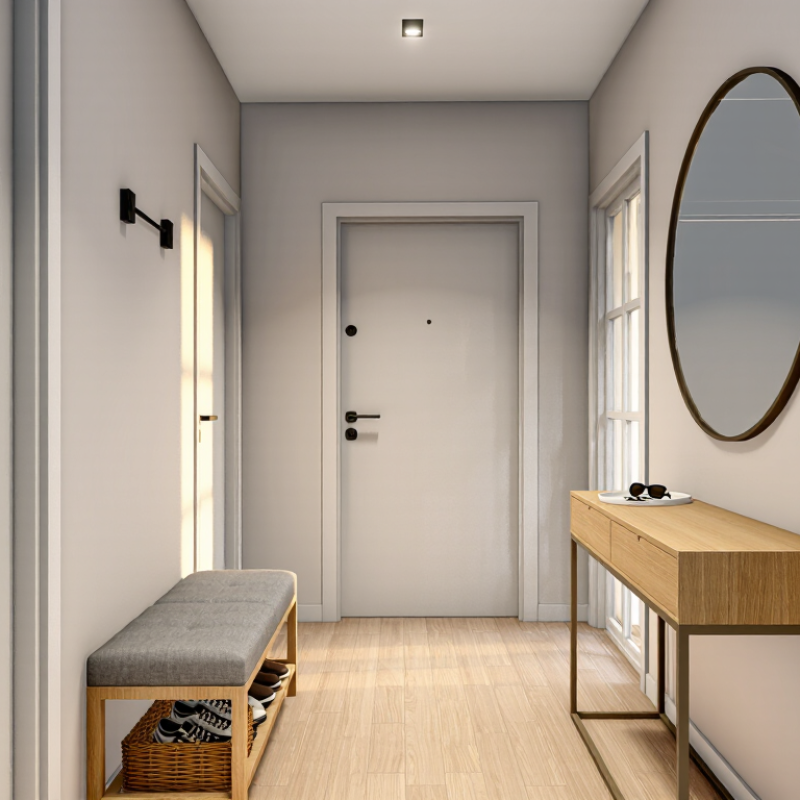
An entryway is more than a passage; it shows how a home works. In its 2023 Profile of Home Staging, the National Association of REALTORS reported that 81% of buyers’ agents said staging helped buyers visualize a property as their future home. In a small foyer, a slim console, one chair, and a clear path can show where keys land and shoes come off. Furniture gives scale to a blank threshold. But too many pieces can make the entrance feel narrower.
Tips: Measure the walkway before placing furniture. Keep the door swing clear. Try a narrow table with a small tray, then add a mirror to reflect daylight. A basket can suggest useful storage, but leave it mostly empty. Less can be enough.
Staging should clarify a space without disguising its limitations. The NAR finding reflects agents’ perceptions, not a guarantee of faster sales or higher offers. Choose furniture that fits the home’s proportions, and check the view from the front door. If the entry is tight, one well-sized bench may explain the space better than a full furniture set. Sometimes the simplest arrangement feels most honest.
| Data point or design dimension | What it tells us | How entryway furniture can help |
|---|---|---|
| 81% of buyers’ agents | In the National Association of Realtors’ 2023 Profile of Home Staging, 81% said staging made it easier for buyers to visualize a property as their future home. This finding concerns home staging overall, not entryways specifically. | A thoughtfully furnished entry can help show how the space may be used when arriving home, without implying that entryway furniture alone produces this result. |
| First impression Visual role |
The entry is the transition between the front door and the home’s interior, so its appearance contributes to the initial impression of the space. | Use a suitable console, bench, or a small number of accessories to make the area feel intentional while keeping the doorway clear. |
| Everyday function Storage and seating |
Entryways often serve as a place to pause, sit briefly, or keep items used when coming and going. The exact needs depend on the home and its occupants. | Choose furniture that fits the available space, such as a bench for seating or a console with storage. Avoid suggesting that every entry requires the same pieces. |
| Scale and circulation Room to move |
Furniture that is too large can obstruct movement or make a compact entry feel crowded; the appropriate size depends on the layout. | Measure the entry and door swing before selecting furniture. Keep the natural walking route open and use a smaller piece where space is limited. |
| Staging clarity Purpose of the space |
A few appropriately chosen furnishings can communicate a room’s possible function more clearly than an empty or cluttered space. | Give each item a clear purpose, keep surfaces simple, and leave enough visible floor area for buyers to read the entry’s size and layout. |
Source for the 81% statistic: National Association of Realtors, 2023 Profile of Home Staging. The remaining rows describe general design considerations, not survey statistics.
A slim console, wall shelf, or small bench can help. Leave the walking route open.
Use a shallow tray or bowl near the door. Put hooks and a shoe basket within easy reach.
Place hooks at different heights. Check that children can reach their own coats.
Measure the space before choosing furniture. Open drawers and doors to check their reach.
Yes. A bench, console, or pair of baskets can suggest everyday use. One survey found that 81% of buyers’ agents thought staging helped buyers visualize a home.
Make sure it does not block the door or walking path. A welcoming seat is not useful if people have to squeeze past it.
Keep exits clear and avoid furniture that narrows the passage. Try the layout while carrying a bag.
Give keys, shoes, and coats specific places. Review the setup when items stop returning there. One extra basket can become clutter, too.
Decorating an entryway with furniture can make the space feel welcoming while helping visitors understand how the home works. Staging research indicates that 81% of people find staging helpful for imagining themselves in a home, so a thoughtfully arranged entry can make a strong first impression. When considering how to decorate an entryway with furniture, start by preserving an accessible circulation path: aim for at least 36 inches of clear space where possible, and avoid placing items where they obstruct movement.
Choose pieces according to everyday needs. A small seat can make putting on shoes easier, while a console or compact cabinet can provide a useful surface and keep essentials organized. Arrange furniture so frequently used items are within reach and the route through the entry remains open. Keep the styling simple and balanced, using practical storage and a few welcoming details to help prospective buyers picture the space as both attractive and easy to use.

 Oakes Furniture