How to Make a Small Room Look Bigger with Furniture?

Time:2026-09-11 Author:Ethan
0%

Learning how to make a small room look bigger with furniture starts with careful observation, not expensive decoration. Measure the room, including door swings, windows, and walking paths. A sofa that looks compact online may overwhelm a narrow living area. I have learned this through repeated furniture layouts. One extra chair can change the room completely.

Choose pieces with visible legs, slim frames, and practical proportions. They allow more flooring to remain visible. That open floor helps the room feel less crowded. A glass coffee table can preserve sightlines, while a wall-mounted shelf uses vertical space without blocking movement. Keep larger furniture near the walls, but avoid pushing everything tightly into corners. That common habit can create an awkward, empty center.

Use one visual anchor.

A light-colored sofa, a low-profile media unit, or a tall bookcase can guide the eye. However, these ideas are not universal. Dark furniture may work beautifully when the room receives strong daylight. Open shelving may also look spacious, but clutter quickly weakens the effect. Review each choice from the doorway and from the main seat. If the room feels difficult to cross, the layout needs revision.

This guide explains how furniture scale, placement, storage, and visual balance can expand a small room’s perceived size. The recommendations focus on measurable spacing and everyday comfort. A beautiful arrangement is still unsuccessful if it makes cleaning difficult or blocks natural light. Small rooms need restraint, but they should not feel lifeless.
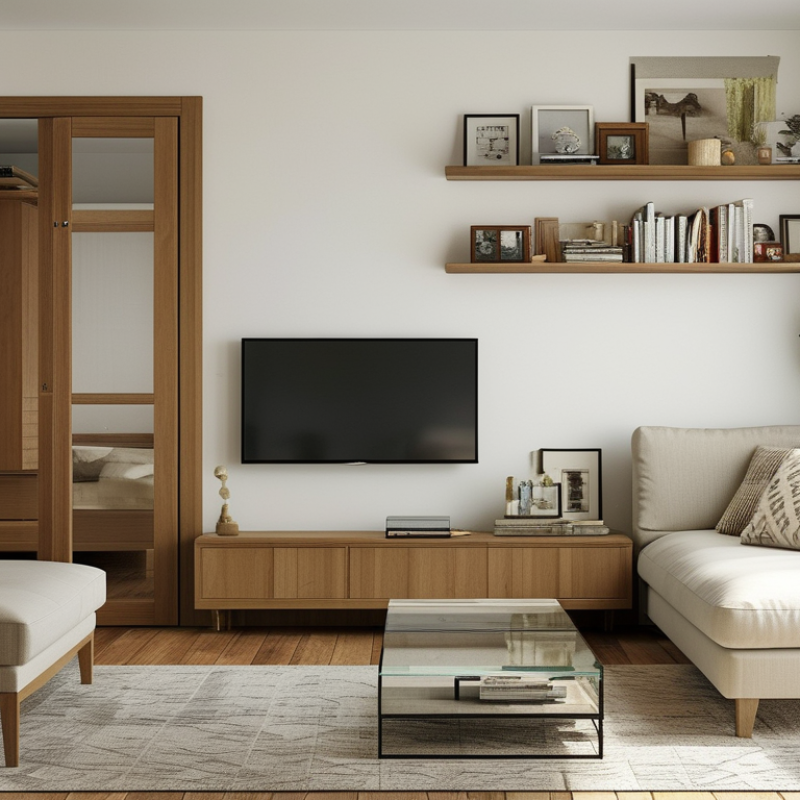
How to Make a Small Room Look Bigger with Furniture?

Assess the Room’s Layout, Light, and Furniture Needs

A small room looks larger when its layout supports easy movement. Measure the walls, door swing, windows, and walking paths before choosing furniture. Leave a clear route of at least 70 centimeters where possible. This prevents a narrow room from feeling blocked. A compact sofa with raised legs can reveal more floor, while a slim table may replace a bulky desk. Scale matters more than the number of pieces.

Light changes how furniture is perceived. Observe the room in the morning, afternoon, and evening. Place taller pieces away from windows so they do not interrupt daylight. Pale upholstery and reflective surfaces can spread brightness, but excessive shine may feel cold. A mirror positioned across from a window can extend the visual space. Keep window coverings simple. Heavy fabric can make a small room feel closed.

Furniture should match real daily needs, not an imagined lifestyle. If the room serves as an office and bedroom, choose pieces with more than one function. Storage under a bed or bench can reduce visible clutter. Keep frequently used items within reach, but hide irregular objects behind closed fronts. Less visual noise helps.

I once selected a narrow chair that looked ideal on paper. It was uncomfortable after an hour. Comfort still matters. Test furniture with actual movement, sitting, and storage habits before committing. A room may look spacious in a photograph, yet feel awkward in use. Adjust the arrangement for several days; the first layout is not always the best.

Choose Furniture That Fits the Room’s Size and Purpose

A small room feels crowded when furniture ignores its measurements and daily purpose. Measure walls, door swings, windows, and walking paths before buying anything. Leave about 75 centimeters for a comfortable main route, though your layout may need more. Choose a bed, sofa, or desk that supports the room’s main activity. A narrow writing desk supports work without stealing the entire floor. Furniture with visible legs also exposes more flooring, creating a lighter visual rhythm. I once placed a deep chair near a doorway; it looked attractive, but every movement felt awkward.

Tips: Mark each furniture footprint on the floor with masking tape. Live with the outline for one day. If you bump it, change it. Select pieces with storage when the room needs both seating and organization. A bench with compartments can replace separate seating and cabinets. Keep tall storage against one wall, avoiding scattered high pieces. Match furniture depth carefully. A compact sofa may fit better than a full-size model, even if its seat feels less luxurious. That trade-off deserves honest attention.

Use one visual anchor, such as a low bed or slim table, rather than several competing pieces. Keep surfaces partly clear, because crowded tops make a room feel smaller. Foldable or nesting furniture can adapt when the room changes from office to dining area. Check proportions from the doorway, not only from a floor plan. Photos often reveal imbalance that your eyes accept in person. Measurements guide decisions, but real movement remains the final test.

Arrange Furniture to Preserve Open Paths and Sightlines

Small rooms feel larger when the eye can travel without meeting obstacles. Preserve open paths between the entrance, seating, windows, and storage. A clear route matters more than filling every corner.

The National Kitchen and Bath Association’s Planning Guidelines use 36 inches as a practical minimum walkway clearance. Treat that measurement as a starting point, not a rigid rule. In a 10-by-12-foot room, position the sofa against the longest wall and leave a direct path beside it. Keep chairs slightly angled, rather than blocking the room’s center. Low furniture also protects sightlines across the space. A slim table can work better than a deep cabinet.

A 2023 global home-life report surveyed more than 37,000 people across 38 markets. It found that comfort and control strongly shape how people value their homes. That supports flexible layouts, not permanent furniture walls. Use pieces that can move easily when guests arrive. I still misjudge scale sometimes. A chair that looks compact in a showroom can dominate a narrow room. Mark its footprint with paper before buying. Check the walking route at night, too. Shadows reveal blocked corners that daylight hides.

How to Make a Small Room Look Bigger with Furniture?

Arrange furniture to preserve open paths and sightlines. These practical clearance targets help maintain movement and visual openness in a compact room.

Aim to keep the main walking path about 36 inches wide, secondary paths at least 30 inches wide, and roughly 18 inches between a coffee table and seating. Keeping these areas unobstructed makes the room feel more spacious.

Use Multifunctional and Wall-Mounted Pieces to Save Space

How to Make a Small Room Look Bigger with Furniture?

In a compact room, every object should earn its floor space. The U.S. Census Bureau’s Characteristics of New Housing, 2023 report lists the median new home at 2,411 square feet. Smaller homes make flexible furniture increasingly practical. Choose an ottoman with hidden storage, a dining table with folding leaves, or a sofa that opens for guests. Keep the center visible.

Wall-mounted pieces create a stronger sense of openness. Install a shallow desk beneath a window, then fold it flat after work. Floating shelves can hold books, baskets, and a small lamp without consuming floor area. A wall-mounted television also removes the need for a deep cabinet. The Freedonia Group’s 2023 home organization report identifies storage efficiency as a continuing consumer priority. That supports using vertical space carefully.

Measure the wall, furniture depth, and walking path before drilling. Leave about 30 inches for a comfortable main passage, where possible. Check stud locations and the manufacturer’s load rating. A shelf that looks light can become dangerous when filled with books. I have seen layouts fail because storage was added everywhere. Too much storage still feels crowded. Leave some wall empty. That pause gives the room visual breathing space, although my first layout usually needs one more revision.

Add Mirrors, Light Colors, and Visual Balance to Expand the Room

A small room feels larger when light can travel across it. Place a mirror opposite a window, not directly beside a crowded shelf. This doubles the visible brightness and reflects outdoor depth. Choose a slim-framed mirror with a clear, wide surface. Avoid covering every wall; reflection becomes noisy when it repeats clutter.

Light colors support this effect. The 2023 Remodeling Impact Report from the National Association of Realtors gave interior painting a Joy Score of 8.5 out of 10. That result reflects emotional value, not guaranteed spaciousness. Use soft white, pale sand, or muted blue on walls and larger furniture. Similar tones reduce visual breaks. Satin or eggshell finishes can bounce light gently, but glossy surfaces may reveal flaws.

Furniture needs visual balance, not simply smaller dimensions. I usually keep the main walking route at least 30 inches wide, where the layout permits. Choose sofas with raised legs, narrow arms, and open space beneath them. A tall bookcase can draw the eye upward, while one low table prevents the room from feeling top-heavy. Houzz’s 2024 Houzz & Home Study reported that 54% of homeowners renovated during the previous year, showing continued investment in practical home improvements. Still, data cannot replace measurement. I once chose a “compact” chair that blocked a cabinet door. It looked elegant, but it failed the room. Test furniture footprints with painter’s tape before buying.

FAQS

: How should I measure a small room before buying furniture?

: Measure walls, windows, doors, and walking paths. Mark door swings carefully. Keep the main route near 75 centimeters wide when possible. Real movement matters more than a perfect floor plan.

How can I test furniture size before purchasing it?

Mark each furniture footprint with masking tape. Leave the outline in place for one day. Walk around it and open nearby doors. If you bump it, revise the layout.

What furniture works best in a compact room?

Choose pieces that support the room’s main purpose. A narrow desk can support work without consuming the floor. Storage benches, nesting tables, and folding furniture add flexibility. Smaller may feel less luxurious.

How can multifunctional furniture save space?

Use an ottoman with hidden storage or a table with folding leaves. A sofa bed can support occasional guests. One piece may replace seating and storage. Keep the center visibly open.

Can wall-mounted furniture make a room look larger?

Yes, shallow wall-mounted pieces reduce floor clutter. Try a floating shelf or a folding desk beneath a window. Check wall structure and load limits before drilling. Leave some wall empty.

How much walking space should I leave around furniture?

Aim for about 30 inches on a comfortable main passage when possible. Some rooms need more space. Measure furniture depth beside the walking route. A beautiful chair can still block a cabinet door.

How do mirrors and light colors create more visual space?

Place a mirror opposite a window to reflect light and outdoor depth. Choose soft white, pale sand, or muted blue. Similar tones reduce visual breaks. Too many reflections can make clutter feel louder.

How can I keep a small room visually balanced?

Use one main visual anchor, such as a low bed or slim table. Furniture with raised legs exposes more flooring. Combine one tall storage piece with lower furniture. My first arrangement often needs another revision.

Conclusion

Learning how to make a small room look bigger with furniture begins with understanding the space. Consider the room’s layout, natural light, entrances, and daily activities before choosing any pieces. Select furniture that matches the room’s scale and purpose, avoiding oversized items that block movement or make the space feel crowded. Arrange sofas, tables, and storage units to maintain clear walking paths and open sightlines, helping the room feel more connected and spacious.

Multifunctional furniture, such as storage ottomans, nesting tables, or beds with built-in drawers, can provide practical benefits without taking up unnecessary space. Wall-mounted shelves and lighting also free the floor and create a cleaner appearance. To enhance the effect, use mirrors to reflect light, choose soft or light colors, and maintain visual balance by distributing furniture evenly. With thoughtful planning, even a compact room can feel comfortable, organized, and more open.

Ethan

Ethan

Ethan is a seasoned marketing professional with a deep expertise in our company's innovative product line. With a passion for sharing knowledge and insights, he takes the lead in regularly updating our corporate blog, where he explores industry trends, product features, and effective marketing......