China Top 10 Solid Wood Furniture How Long Does It Last?

Time:2026-10-16 Author:Sienna
0%

China’s top 10 solid wood furniture makers offer more than attractive designs. They show how timber selection, joinery, finishing, and workshop quality affect long-term use. Many buyers ask, “how long does solid wood furniture last?” The honest answer depends on several practical conditions.

Well-made solid wood furniture can serve for 15 to 30 years, and sometimes much longer. Antique-quality pieces may remain useful for generations. However, no responsible guide should promise a fixed lifespan. A dining table beside a sunny window faces different stress from a bedroom cabinet in a dry room. Humidity, direct heat, cleaning habits, and daily loading all matter. Small gaps may appear as wood expands and contracts. That is normal, not always a manufacturing defect.

This overview examines ten leading Chinese solid wood furniture options through a buyer’s lens. It considers wood species, moisture control, structural design, surface protection, and repairability. Experienced manufacturers usually explain timber grades and construction methods clearly. Reliable suppliers should also provide product specifications, care instructions, and realistic warranty terms. Ask questions.

Look closely at drawer joints, table edges, panel movement, and the finish under strong light. These details often reveal more than a showroom photograph. Still, even careful inspection has limits. Online descriptions can sound stronger than the actual product. For that reason, this guide balances manufacturer information with practical use factors, helping readers judge durability without exaggerated promises. Good furniture can age beautifully. Poor care can shorten its life quickly.
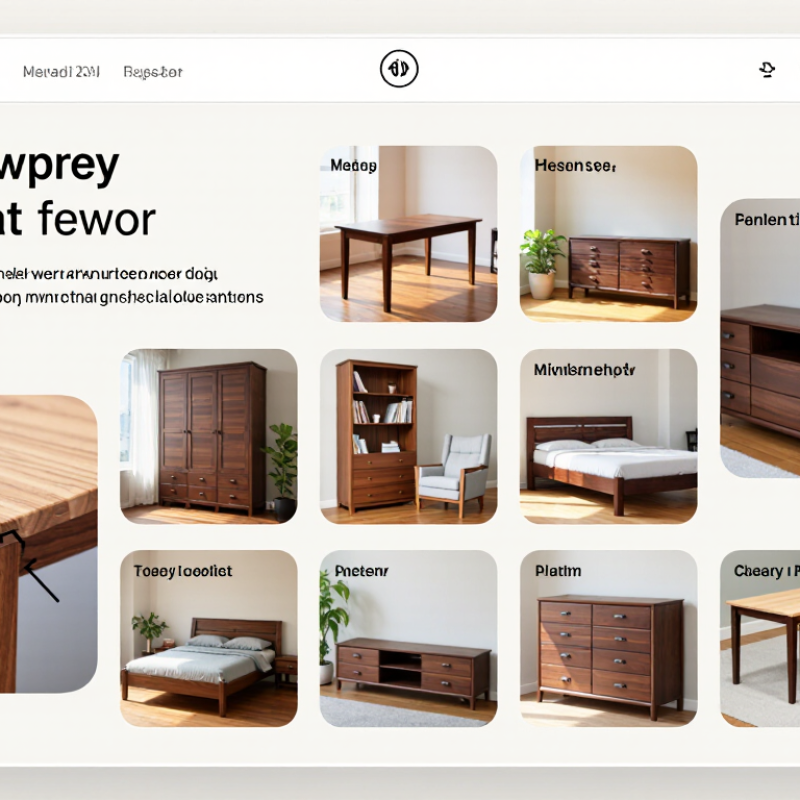
China Top 10 Solid Wood Furniture How Long Does It Last?

China’s Top 10 Solid-Wood Species: Key Uses and Janka Hardness Data

China’s Top 10 Solid-Wood Species: Key Uses and Janka Hardness Data

Solid wood furniture can last for decades, but species selection matters. In Chinese workshops and homes, oak ranks among the most practical choices, with about 1,290 lbf on the Janka scale. It suits dining tables, cabinets, and bed frames. Ash reaches nearly 1,320 lbf and works well for chairs and visible grain panels. Beech measures around 1,300 lbf, making it useful for furniture legs and curved components. Maple is harder, near 1,450 lbf, and handles busy tabletops. Birch averages about 1,260 lbf and supports drawers, cabinets, and children’s furniture.

Oak ranks among the most practical choices, with about 1,290 lbf on the Janka scale. It suits dining tables, cabinets, and bed frames.

Ash reaches nearly 1,320 lbf and works well for chairs and visible grain panels.

Beech measures around 1,300 lbf, making it useful for furniture legs and curved components.

Maple is harder, near 1,450 lbf, and handles busy tabletops.

Birch averages about 1,260 lbf and supports drawers, cabinets, and children’s furniture.

Walnut is softer, near 1,010 lbf, but offers rich color for desks and statement panels.

Teak measures approximately 1,070 lbf and performs well in humid rooms when properly finished.

Rubberwood, around 960 lbf, is often used for affordable indoor furniture.

Elm averages about 830 lbf and suits broad boards with a rustic appearance.

Pine is softer, near 690 lbf, yet remains practical for shelving and painted pieces.

These figures can vary with species, moisture, and testing methods. Hardness is not durability alone. I have seen poorly sealed hard wood fail faster than softer wood with careful maintenance.

Tips: Check moisture content before buying. Look for tight joints, even grain, and sealed end grain. Avoid placing furniture beside heaters or wet walls. A coaster prevents a small stain, but not every mark disappears. That is worth remembering.

How GB/T 3324-2017 Defines Solid-Wood Furniture Quality and Durability

China Top 10 Solid Wood Furniture: How Long Does It Last?

GB/T 3324-2017 does not promise a fixed service life for solid-wood furniture. Instead, it defines technical requirements for materials, structure, appearance, coating, safety, inspection, marking, packaging, and storage. Quality is judged through measurable details, such as stable joints, suitable wood moisture, smooth surfaces, and acceptable dimensional accuracy. These factors affect whether a cabinet remains firm after years of opening and closing.

In practical inspections, moisture control is often the quietest durability issue. Wood that is too wet may shrink indoors, while overly dry wood can develop cracks. Good construction also matters. Properly fitted joints, reinforced stress points, and even surface treatment reduce loosening and deformation. However, GB/T 3324-2017 cannot remove every natural change in wood. Small color differences may be normal. A serious split or unstable frame is not. Service life still depends on humidity, sunlight, load, cleaning habits, and relocation frequency.

Tips: Ask for material details, inspection records, and care instructions. Keep indoor humidity reasonably stable. Avoid placing heavy objects on unsupported spans. Wipe spills quickly, and do not treat a standard as a lifetime guarantee. That expectation needs reconsideration.

Why 8–12% Wood Moisture and 40–60% RH Matter for Service Life

China’s top solid wood furniture can last for decades, but service life depends heavily on moisture control. The USDA Forest Products Laboratory’s Wood Handbook, FPL-GTR-282 (2021), shows that wood moisture changes with surrounding temperature and relative humidity. At about 70°F, 40–60% RH produces an approximate equilibrium moisture content of 7.7–11%. That range closely supports the practical 8–12% target used for indoor furniture.

When wood leaves this range, movement becomes visible. Dry winter air can open small joints, split end grain, or loosen chair connections. Excess humidity may cause drawers to stick and tabletops to cup. The Wood Handbook also explains that wood moves far more across the grain than along it. Therefore, construction quality matters as much as species selection. A “20-year life” claim sounds useful, but it cannot predict every home, heating system, or careless spill. Real service life is less tidy.

Tips: Keep indoor RH near 40–60%, and avoid placing furniture beside radiators, vents, or sunny windows. Use a small hygrometer. Wipe spills quickly, but do not flood the surface. Check loose joints early; minor repairs usually prevent larger movement. Rechecking seasonal humidity is worthwhile. Even good furniture can fail when the room stays too dry or damp for months.

China Top 10 Solid Wood Furniture How Long Does It Last? - Why 8–12% Wood Moisture and 40–60% RH Matter for Service Life

The following service-life ranges are practical estimates for well-made indoor solid wood furniture used under stable residential conditions. Actual performance depends on wood species, joinery, load, finish quality, sunlight, cleaning practices, and exposure to moisture.

Rank Solid Wood Furniture Type Typical Service Life Recommended Wood Moisture Content at Installation Recommended Indoor RH Main Service-Life Benefit Common Risk When Conditions Are Poor Practical Maintenance Interval
1 Dining Table 15–30 years 8–12% 40–60% Stable moisture conditions reduce seasonal tabletop movement and joint stress. Warping, open glue joints, surface cracking, or finish failure from rapid humidity changes. Clean routinely; inspect and refresh protective finish about every 3–5 years as needed.
2 Bed Frame 15–25 years 8–12% 40–60% Controlled moisture helps preserve the fit of rails, slats, bolts, and mortise-and-tenon joints. Squeaking, loose joints, split rails, and movement-related structural instability. Tighten hardware every 6–12 months; check slats and joints annually.
3 Chest of Drawers 15–25 years 8–12% 40–60% Moderate humidity variation helps drawers maintain usable clearances. Sticking drawers, cracked panels, split drawer fronts, or loose runners. Keep runners clean and lubricated when appropriate; inspect annually.
4 Wardrobe or Armoire 15–30 years 8–12% 40–60% Stable RH limits door and side-panel movement, helping maintain alignment. Doors rubbing or dropping, panel splits, joint opening, and back-panel distortion. Check hinges and alignment every 6–12 months; keep away from damp walls.
5 Bookshelf 10–20 years 8–12% 40–60% Moisture control minimizes shelf deflection and movement at fixed joints. Sagging shelves, loose fasteners, racking, and cracking around end joints. Redistribute heavy books; check shelf level and fasteners annually.
6 Coffee Table 10–20 years 8–12% 40–60% Consistent RH helps maintain a flat top and reduces finish stress. Cupping, water-ring damage, edge checking, and loose leg joints. Wipe spills immediately; inspect and maintain the finish every 2–4 years.
7 Writing Desk 15–25 years 8–12% 40–60% Balanced moisture content helps preserve a level work surface and drawer fit. Top cupping, cracked end grain, drawer binding, and weakened leg-to-top joints. Use coasters and desk mats; inspect joints and finish every 1–2 years.
8 Dining Chair 10–20 years 8–12% 40–60% Stable moisture reduces repeated loosening of high-stress chair joints. Loose legs, split rungs, joint failure, and squeaking caused by movement. Check and tighten joints every 6–12 months; avoid leaning back on two legs.
9 TV Cabinet or Sideboard 15–25 years 8–12% 40–60% Moderate RH supports door alignment and helps limit panel movement. Door misalignment, cracked panels, loose shelves, and cable-opening damage. Keep ventilation openings clear; inspect doors, shelves, and hardware annually.
10 Entryway Console 10–20 years 8–12% 40–60% Stable indoor conditions help preserve narrow tops, legs, and decorative joints. Top splitting, leg loosening, finish wear, and distortion near exterior doors. Keep away from direct drafts and wet footwear; inspect hardware every 6–12 months.

How moisture and RH affect service life: Wood is hygroscopic, so it naturally gains or loses moisture as indoor relative humidity changes. For typical indoor furniture, a wood moisture content of approximately 8–12% and an indoor RH of 40–60% generally provide a balanced operating range. Rapid changes outside this range can increase shrinkage, swelling, warping, checking, and joint stress. Local climate, heating, air-conditioning, wood species, and furniture construction should be considered when setting the final target.

Expected Lifespan: Comparing 10–30 Years Across Wood Types and Construction

China’s top ten solid wood furniture choices can last 10 to 30 years, but wood species alone does not decide durability. Pine, fir, poplar, and rubberwood often serve well for 10 to 15 years with careful indoor use. Birch and beech commonly reach 15 to 20 years. Ash, oak, walnut, and teak may remain functional for 20 to 30 years, especially when properly dried and sealed.

Construction changes the result. Kiln-dried boards reduce later warping, while mortise-and-tenon joints usually resist loosening better than simple screws. Thick aprons, reinforced corners, and replaceable hardware also extend service life. In practical furniture inspections, I look beneath the finish first. Small gaps, uneven legs, and rough end grain can reveal rushed assembly. Attractive surfaces can hide weak structure.

Room conditions matter every day. Keep furniture away from heaters, direct sunlight, and damp walls. Maintain moderate indoor humidity, and wipe spills quickly. A dining table used heavily may show wear before its frame fails. A bedroom cabinet may last much longer. My estimate is not perfect; actual life depends on maintenance, timber grading, and repair quality. Even durable teak can crack when drying is poorly controlled. A less expensive rubberwood piece may outperform it when its joints are precise and its finish is maintained. Inspect the joints, not just the color.

China Top 10 Solid Wood Furniture: How Long Does It Last?

Expected indoor service life by wood type, assuming kiln-dried solid wood, sound joinery, protective finishing, and regular maintenance.

Teak, walnut, maple, and oak commonly offer the longest service life, especially when reinforced with mortise-and-tenon, dovetail, or other durable joinery. Pine, poplar, and rubberwood can still provide reliable service for many years, but their lifespan is more sensitive to moisture, daily impact, joint design, and finish quality. The ranges are practical estimates rather than guarantees.

How Joinery, Finish, Load Capacity, and Care Determine Actual Longevity

China’s top 10 solid wood furniture pieces can last 10 to 30 years when construction and care work together. The wood species matters, but joinery often matters more. Tight mortise-and-tenon joints resist movement better than staples or excessive glue. Inspect corners, drawer connections, and chair legs closely. Small gaps may grow after seasonal humidity changes.

Finish protects the surface from moisture, stains, and daily abrasion. A well-applied oil finish feels natural but needs periodic renewal. A sealed lacquer finish offers stronger resistance, though scratches can be harder to repair. Load capacity also affects actual longevity. A dining table designed for meals should not support heavy machinery. A cabinet carrying overloaded books may slowly bow.

I once underestimated shelf thickness during a furniture assessment. The cabinet looked strong, but the center sagged within months. That mistake remains useful.

Tips: Keep indoor humidity reasonably stable. Use coasters under warm cups. Lift furniture instead of dragging it. Tighten loose hardware early. Clean with a soft, slightly damp cloth, then dry the surface. Avoid placing solid wood beside radiators or in direct, intense sunlight. Check joints twice each year, especially on chairs and beds. Careful owners sometimes focus on visible scratches and miss movement underneath. That hidden movement deserves attention.

FAQS

Which solid-wood species is hardest among the listed options?

Maple ranks highest, at nearly 1,450 lbf on the Janka scale. It suits busy tabletops. Not always.

Which woods work well for everyday furniture?

Oak, ash, beech, maple, and birch offer useful hardness. They suit tables, chairs, cabinets, drawers, and bed frames.

Does greater hardness guarantee longer furniture life?

No. Hardness is only one factor. Poor sealing can make hard wood fail before softer wood.

How long can solid-wood furniture usually last?

Many pieces last 10 to 30 years. Pine and rubberwood often reach 10 to 15 years indoors.

What affects furniture lifespan besides wood species?

Joint quality, timber drying, humidity, sunlight, load, cleaning, and repairs all matter. Construction changes the result.

Does the furniture standard promise a fixed service life?

No. It evaluates materials, joints, surfaces, safety, inspection, packaging, and storage. It is not a lifetime guarantee.

How can buyers inspect furniture before purchasing?

Check tight joints, even legs, smooth surfaces, sealed end grain, and inspection records. Look underneath the finish.

Why is moisture control important for solid wood?

Excess moisture can cause indoor shrinkage later. Overly dry wood may crack. Keep humidity reasonably stable.

Where should solid-wood furniture not be placed?

Avoid heaters, wet walls, and strong direct sunlight. These locations can accelerate cracking, warping, or finish damage.

Can affordable wood outperform a harder species?

Yes, sometimes. Precisely fitted joints and maintained finish may outperform poorly constructed premium furniture. My estimate is imperfect.

Conclusion

How long does solid wood furniture last? In well-controlled conditions, quality solid-wood furniture can serve for 10 to 30 years or longer, depending on the species, construction, and maintenance. A comparison of China’s ten commonly used solid-wood species shows that Janka hardness influences resistance to dents, wear, and daily impact, while different woods are better suited to tables, chairs, cabinets, or bed frames. However, hardness alone does not determine durability.

Quality standards such as GB/T 3324-2017 emphasize sound materials, stable construction, safe finishes, and reliable workmanship. Wood moisture kept around 8–12% and indoor relative humidity maintained at 40–60% can reduce cracking, swelling, warping, and joint failure. Mortise-and-tenon or other strong joinery, suitable load capacity, protective finishing, gentle cleaning, and protection from heat, sunlight, and standing water all extend service life. With proper care and a stable indoor environment, solid-wood furniture can remain functional, attractive, and repairable for decades.

Sienna

Sienna

Sienna is a skilled marketing professional with a deep expertise in our company’s core products and services. With a passion for innovation and detail, she plays a pivotal role in crafting insightful blog posts that not only highlight the unique features of our offerings but also provide valuable......